


MadOut 2: Grand Auto Racing
4.211.99K Reviews
App Specs
- Version
- 20.44
- Updated On
- License
- Free
- Downloads
- 100,000,000+
- Developer
- MadOut Games LLC FZ
- Categories
- Racing
- Platform
- Android, iOS
Screenshots
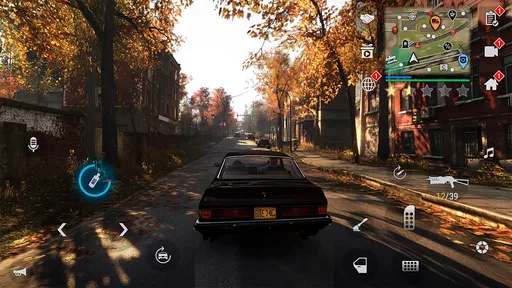
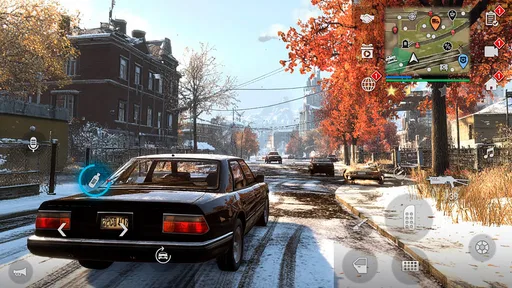
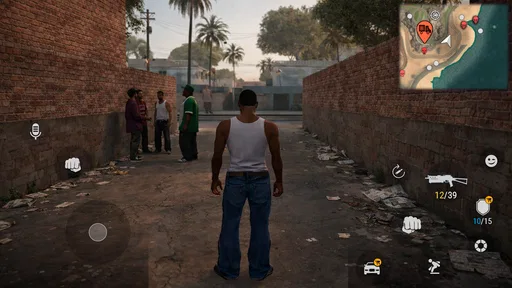
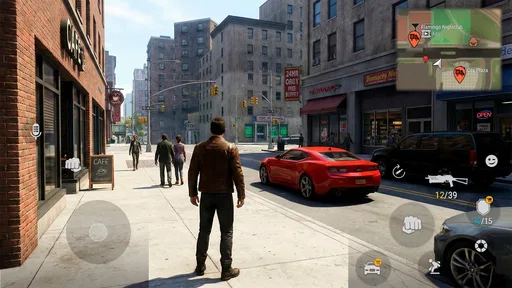
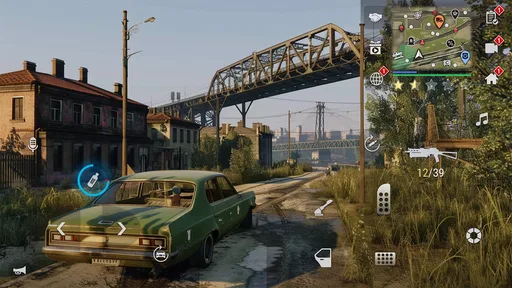
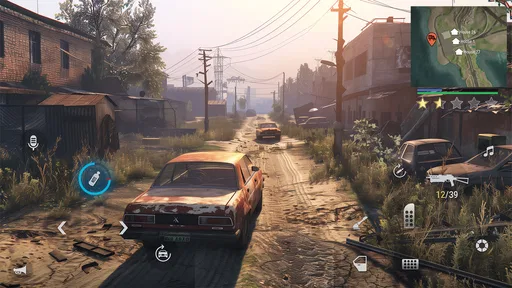
 Analysis by AppCompare
I approached MadOut 2: Grand Auto Racing as a decision rather than simply another racing download. It is a free, mature-rated open-city game from MadOut Games LLC FZ that mixes driving with crime-themed action. That combination matters because it does not aim for the focused precision of a traditional circuit racer. Instead, it is built for players who want to jump between cars, races, trouble, and free-roaming moments in one large, chaotic setting.
After spending time with it, my main impression is that its appeal comes from variety and freedom. I can start with a quick drive, look for a race, cause some mayhem, or simply explore until something catches my attention. The experience is less about perfect lap times and more about creating an entertaining session from whatever happens next. If that sounds more appealing than a carefully controlled racing simulator, this game deserves a closer look.
How I would decide whether it fits
The first question is what kind of racing game you actually want. If you are looking for clean circuits, exact braking points, and a serious focus on vehicle handling, this is probably not the best match. Its identity is much broader. Cars are central, but they exist inside a crime-themed open world rather than on isolated tracks. I found that the freedom is often more memorable than the individual races.
Guides and Analysis on MadOut 2: Grand Auto Racing
The second question is whether you enjoy an unpredictable game loop. In a conventional racer, I know what the next few minutes will involve: choose a vehicle, enter an event, complete the laps, and compare the result. Here, I may begin with a race and end up driving through the city, dealing with a chase, or testing how far I can push the environment. That lack of strict structure is a strength for curious players, but it can feel unfocused if you prefer clear progression.
I would also consider the mature content before installing it for a younger player. The game carries a Mature 17+ rating, and its presentation is built around gangster themes, crimes, and aggressive driving. It is better suited to adults who are comfortable with that tone than to families searching for a harmless arcade racer.
Device compatibility is relatively approachable because the game requires Android 8.0 or later. On a compatible phone or tablet, the more important practical question is how comfortable you are with a large, active 3D world on a mobile screen. I personally found that a bigger display makes driving and looking around easier, while a smaller phone can make busy moments feel crowded.
The game has been available since May 1, 2017, and its current version is 20.44. That history helps explain why it has developed such a large audience, but it also means I would approach it as an established, evolving mobile game rather than a brand-new technical showcase. Its lasting appeal is the combination of driving and open-world disorder, not a promise of a perfectly streamlined racing package.
Worth Reading Before You Choose

Basketball Stars: Multiplayer Is Fast, but Can It Recover When Matches Go Wrong?

WEBTOON Turns Phone Updates Into a Better Reading Routine

Link to Windows Runs on Shared Habits, Not Social Feeds

How Alibaba.com Dominates the B2B Marketplace

Metro's Quiet Rise: Redefining Mobile Communication

Harnessing Ecosystem Power with Phone Tracker by Number
The first session: what stands out immediately
The opening experience is easy to understand at a basic level: get behind the wheel and start moving. I did not need to treat it like a complicated simulation before enjoying it. The city gives me room to experiment, and the crime setting makes ordinary driving feel more dramatic than it would in a standard traffic game.
What I noticed quickly is that the game rewards improvisation. A planned route can turn into a detour, and a simple drive can become a chase or a race-like challenge. This is one of the reasons I would recommend it to someone who gets bored when every event follows the same formula. The world feels most entertaining when I allow myself to react instead of trying to control every second.
That same freedom can create friction. Open-world games often need a little patience while the player learns where to go and how to make progress. If you expect the game to explain a polished sequence of objectives at every step, the experience may feel less satisfying. I had more fun once I stopped measuring it against a traditional campaign and treated the city as a playground.
Why the open-city mix works
The strongest design choice is the way racing is placed inside a wider criminal sandbox. Driving is not separated from the rest of the game; it is the tool I use to move through the world, escape problems, search for activity, and create my own moments. That gives even a short session a sense of possibility.
For example, I can play during a brief break by choosing a car and driving without committing to a long event. If I have more time, I can turn that drive into a longer session by exploring, looking for action, and trying different approaches to the city. This makes the game more flexible than a racer that only feels worthwhile when I can finish a complete championship or a lengthy series of events.
My favorite use case is the player who enjoys making personal challenges. I might decide to reach a destination without taking the obvious route, practice controlling a car through crowded areas, or see how long I can keep a spontaneous pursuit going. These goals are not the same as formal racing objectives, but they give the open world purpose when I want something less structured.
There is also a social imagination to the design, even when I am playing alone. The city, cars, and crime theme create situations that feel like scenes from an action game rather than isolated driving tests. That atmosphere is a major reason to choose this title over a pure racing alternative.
Driving, races, and the trade-off between freedom and precision
I would describe the driving as accessible before I would describe it as demanding. That is not an insult. It makes the game easier to pick up, especially for someone who wants immediate movement instead of a long tutorial about racing technique. The trade-off is that players who enjoy highly exact handling may find the experience less rewarding than a dedicated racing game.
My practical advice is to spend the first sessions learning how the car responds before worrying about winning everything. Mobile controls can feel different depending on the device and the player’s preferred input style, so I would adjust gradually rather than blaming the game after one awkward turn. Once I understood the rhythm of acceleration, steering, and recovery, I could focus more on the city and less on fighting the controls.
A useful habit is to treat the road as part of the challenge. In a circuit racer, leaving the track is usually a mistake. Here, the wider environment can be part of the fun. I found that taking a less direct line sometimes produced a more enjoyable moment than following the fastest route. This is a small but important difference: the game rewards curiosity, not only efficiency.
Still, players who want every vehicle to feel carefully balanced for competitive racing should keep their expectations in check. The attraction is the full package of cars, movement, and crime-themed freedom. If your priority is disciplined competition, another racing category will probably serve you better.
How I would use the city in everyday play
Imagine having fifteen minutes before leaving for work or school. I would not open this game expecting to complete a major progression goal. Instead, I would select it when I wanted an immediate burst of driving: enter the world, find a car, create a short objective, and stop when the session naturally ends. That makes it useful for casual entertainment, provided I am comfortable with a game that does not always provide a neat endpoint.
On a longer evening, I would play differently. I might begin by exploring, shift into racing, and then follow whatever unexpected situation appears. The game is better at supporting this kind of loose plan than at delivering a tightly scripted sequence. In my experience, it becomes more enjoyable when I let the session develop instead of forcing it to behave like a console-style campaign.
One non-obvious tip is to use exploration as a way to learn the game rather than treating it as wasted time. Driving around helps me understand the city’s shape, identify routes that feel comfortable, and become less dependent on reacting at the last moment. That knowledge improves later races and escapes without requiring me to grind through the same activity repeatedly.
Another useful approach is to separate experimentation from progress. I would use one session to test driving ideas and another to pursue more serious goals. Mixing both intentions can be frustrating because an experimental detour may interrupt what I wanted to accomplish. Giving each session a simple purpose makes the open world feel less chaotic.
Where this game wins against familiar alternatives
Compared with a conventional arcade racer, this game wins on range. A focused racer may provide cleaner events and a more direct sense of competition, but it usually cannot offer the same crime-themed city experience. Here, I am not locked into a menu-to-track routine. The ability to move freely gives the game a stronger sense of place and makes short, unscripted moments worthwhile.
Compared with a realistic driving simulator, it wins on accessibility and spectacle. I do not need to approach every corner like a technical exercise. The game is more interested in momentum, action, and the feeling of being inside a dangerous urban playground. That makes it a better fit for players who want driving to support an action fantasy rather than define a serious motorsport test.
It also has an advantage over games that offer only a narrow type of session. I can use it for quick driving, casual exploration, or a more involved crime-themed play session. That flexibility is valuable on mobile, where my available time changes from one day to the next.
The audience size is another sign that the formula has broad appeal. It has passed over 100 million installs, holds a 4.2 average from around 1.2 million ratings, and has about 12 thousand written reviews. I would not treat those figures as proof that everyone will enjoy it, but they do show that the open-city racing concept has reached a substantial mobile audience.
Its free entry point is important too. I can try the core experience without paying upfront, which lowers the risk when I am unsure whether open-world driving suits me. The game includes optional purchases ranging from $0.49 to $99.99 per item, so I would approach spending carefully. My recommendation is to play first, decide whether the basic loop is genuinely enjoyable, and only then consider whether any purchase improves my experience.
Where another racing game may fit better
I would choose a different game if my main goal were competitive lap performance. A dedicated circuit racer is usually a better choice for players who want clearly separated events, precise track learning, and a strong focus on finishing position. This title can provide races, but racing is only one part of its identity.
I would also look elsewhere if I wanted a calm driving experience. The gangster setting and crime-focused tone are not background decoration; they shape the mood. Someone seeking relaxed scenic driving, family-friendly content, or a clean motorsport presentation may feel uncomfortable with the direction here.
Another alternative category makes more sense for players who dislike open-world uncertainty. Some people want to know exactly what to do next, how long an event will take, and what reward follows completion. In this game, I often need to create my own rhythm. That freedom is enjoyable for me, but it can feel like a lack of guidance to someone who prefers a tightly organized progression system.
There is also a device consideration. Although Android 8.0 or later is supported, a compatible operating system does not guarantee that every phone will feel equally comfortable for a busy 3D driving game. If my device has a small screen or struggles with demanding games, I would test it during the free portion before investing time or money. A larger display can make navigation and driving more manageable.
The real cost of switching from another racer
Switching to this game is easy financially because there is no purchase price to enter. The larger cost is learning a different idea of progress. If I come from a structured racing game, I may initially look for a clear ladder of events and feel disappointed when the city asks me to explore more freely. The adjustment is mental as much as mechanical.
I would give myself a few sessions before deciding. The first session tells me whether the controls and tone are acceptable, but it may not reveal the value of the open world. The second or third session is where I can test different play styles: a focused drive, an improvised crime-themed run, and a slower exploration session. If none of those feels enjoyable, switching back to a more specialized racer is the sensible choice.
There is also a time-management trade-off. Because the game can continue in many directions, it is easy to start without a clear stopping point. For short breaks, I would set a personal goal before playing, such as completing one activity or exploring one area. That keeps the freedom from turning into aimless wandering.
For spending, I would keep the same cautious approach. Free access makes trying the game straightforward, but the wide purchase range means I would not assume that every optional item is necessary. I would first decide whether I enjoy the driving and city loop with no pressure to buy anything. If the answer is no, spending will not fix the underlying mismatch.
One advanced tip is to compare the game by session type rather than by feature count. Ask whether it gives me the kind of fifteen-minute or one-hour experience I want. A game can appear to offer more variety yet still be the wrong choice if its moment-to-moment feel does not match my habits. For me, this title works best when I want action and freedom, not when I want a clean sequence of races.
Who should install it, and who should skip it
I recommend it to adults who enjoy open-world driving, crime-themed action, and making their own objectives. It is especially suitable for players who like switching between activities instead of repeating one race format. If I want a mobile game that can fill a short break but also support a longer, unpredictable session, this is a strong candidate.
I would be more selective for someone whose favorite part of racing is technical mastery. If the satisfaction comes from shaving time off a lap, studying ideal lines, or comparing highly controlled vehicle performance, a dedicated racing game will likely be more rewarding. This game’s broader design is its point, so narrowing it to a pure racer creates unfair expectations.
I would also skip it for children because of the Mature 17+ rating and the criminal themes. Even if a young player enjoys cars, the tone is not designed as a family-friendly driving experience. For a younger audience, I would look for a racing game with an age rating and subject matter that better match the household’s expectations.
Players who dislike optional purchases should still be able to try the free game, but they should make a personal spending rule before starting. I prefer deciding in advance that I will evaluate the basic loop first. That simple boundary keeps the free entry point useful without letting the purchase system influence my opinion too early.
My recommendation after weighing the trade-offs
My recommendation is positive, with a clear condition: choose this game because you want a crime-themed open city with racing inside it, not because you want the purest racing experience on mobile. That distinction explains nearly every strength and weakness I noticed.
The combination of cars, races, exploration, and criminal action gives it a personality that a standard track racer cannot easily reproduce. I enjoy the freedom to begin with one plan and end somewhere completely different. The free price also makes trying that formula simple, while the long-running version history and large audience suggest that it has remained relevant to many mobile players.
At the same time, the open structure can feel messy, and the mature tone will not suit everyone. The game is not my first recommendation for serious simulation fans, children, or players who need a tightly directed progression path. Those readers would be happier with a more specialized alternative.
If you are an adult who wants to drive through a chaotic city, create your own short challenges, and accept that not every session will feel perfectly organized, I think it is worth installing. Start without spending, use the first sessions to learn the city and controls, and judge it by the freedom of its overall experience rather than by one race. For the right player, that freedom is exactly what makes MadOut 2: Grand Auto Racing stand out.
Pros
- Large open world with plenty of areas to explore and shortcuts to discover.
- Wide selection of cars with different handling styles and customization options.
- Online multiplayer adds unpredictable races
- chases
- and free-roaming fun.
- Multiple activities beyond racing
- including missions
- stunts
- and combat.
- Simple controls make driving accessible for casual mobile players.
Cons
- Frequent ads can interrupt gameplay
- especially for free players.
- Driving physics feel inconsistent
- with vehicles sometimes bouncing or flipping.
- Online sessions may suffer from lag
- crashes
- or uneven player connections.
- Progression can feel grindy when upgrades require significant in-game currency.
- The open world lacks polish
- with repetitive scenery and occasional glitches.
FAQs for MadOut 2: Grand Auto Racing
What is MadOut 2: Grand Auto Racing?
MadOut 2: Grand Auto Racing is an open-world action and driving game for Android and iOS that combines fast vehicle races, free-roaming exploration, shooting, and multiplayer activities. After installing it, players can move around a large city, steal or collect different vehicles, complete missions, and participate in chaotic online matches. It is designed for users who enjoy arcade-style driving rather than realistic simulation.
Can MadOut 2: Grand Auto Racing be played offline?
Some parts of MadOut 2 can be accessed without a constant internet connection, particularly certain free-roaming and single-player activities, although the available features may depend on the version installed. Online multiplayer modes, shared-world events, account-related functions, and some advertisements or rewards require internet access. For the best experience, a stable connection is recommended, especially when joining multiplayer sessions.
Does MadOut 2: Grand Auto Racing support multiplayer?
Yes, multiplayer is one of the main attractions of MadOut 2: Grand Auto Racing. Players can enter online environments, drive around with other users, compete in races, and take part in unpredictable action across the open map. The experience can be entertaining and highly chaotic, but performance depends on connection quality, device capability, and the number of players active in the session.
Is MadOut 2: Grand Auto Racing free to download?
MadOut 2: Grand Auto Racing is generally available as a free download, allowing users to try its driving, exploration, and action features without paying an upfront purchase price. However, free versions may include advertisements, optional in-app purchases, or paid items that can speed up progression or provide cosmetic and gameplay-related benefits. Parents should review purchase settings before allowing children to play.
What devices are recommended for playing MadOut 2 smoothly?
Because MadOut 2 features a large open world, numerous vehicles, online activity, and action-heavy scenes, it performs best on a relatively modern Android or iOS device with sufficient storage and memory. Older phones may experience longer loading times, reduced frame rates, heating, or occasional crashes. Before downloading, check the current store requirements and keep extra free storage available for updates and cached data.


